1
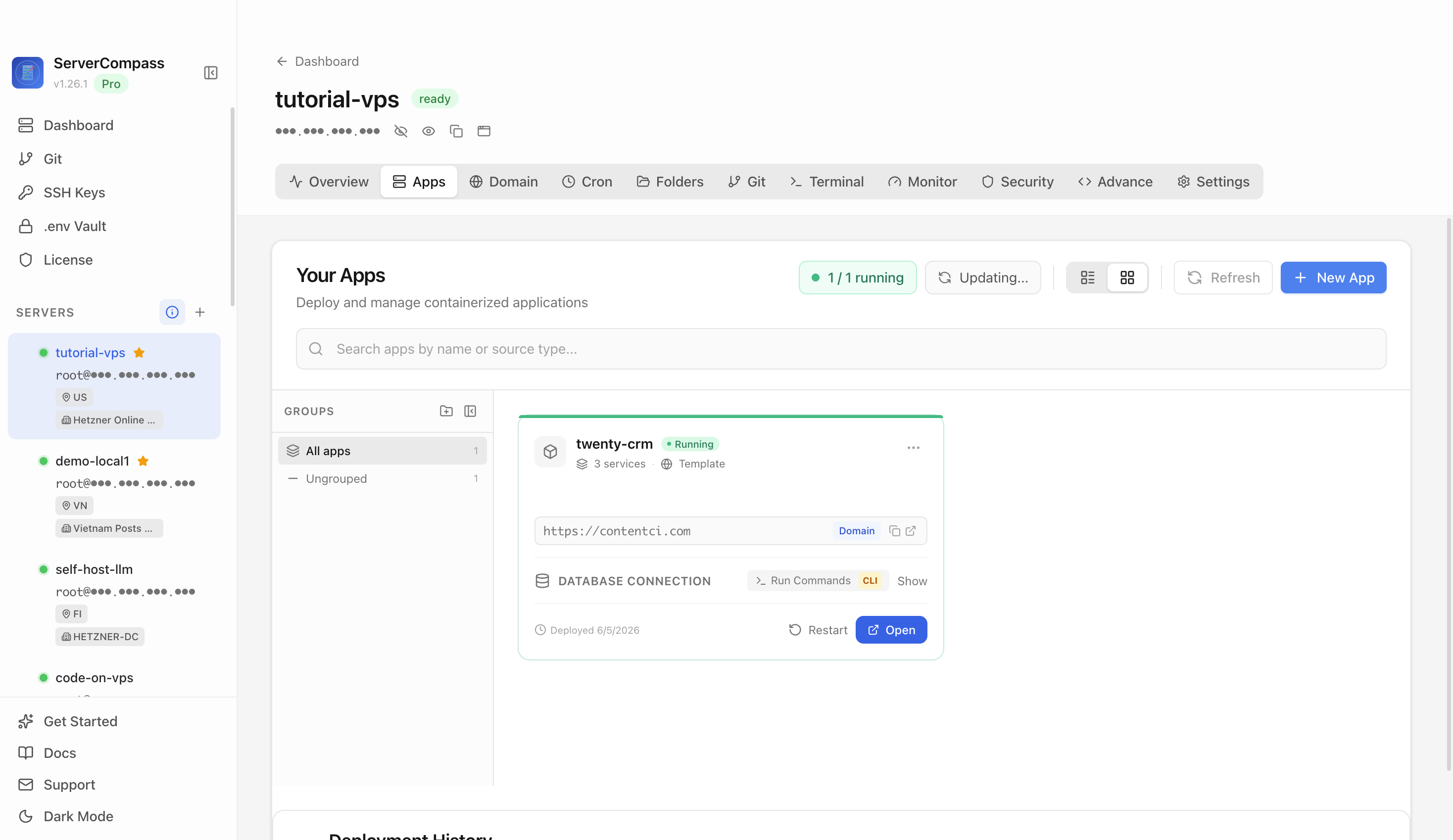
Step 1Open the server Apps tab
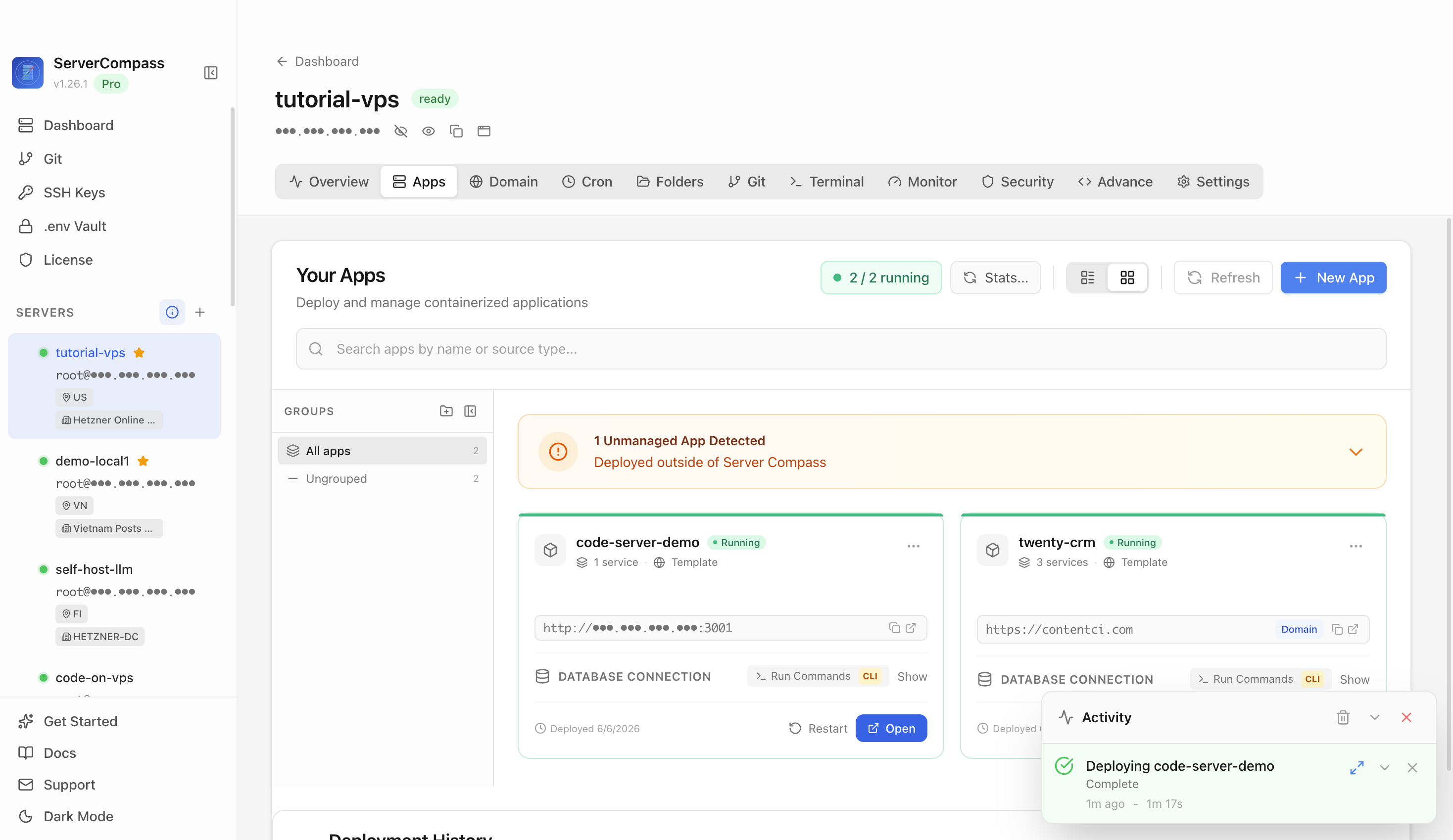
Select the tutorial-vps VPS, open the Apps tab, and start a new app deployment. Keep sensitive server details hidden before capturing or sharing screenshots.

VS Code running in the browser - full IDE accessible from anywhere
Add your server credentials to Server Compass
Choose from our template library
Fill in settings and click Deploy
Use the Code Server template in Server Compass to deploy VS Code in the browser on your VPS, then verify the password login screen.
Select the tutorial-vps VPS, open the Apps tab, and start a new app deployment. Keep sensitive server details hidden before capturing or sharing screenshots.
Click New App and choose the template deployment path so Server Compass can load the built-in catalog.
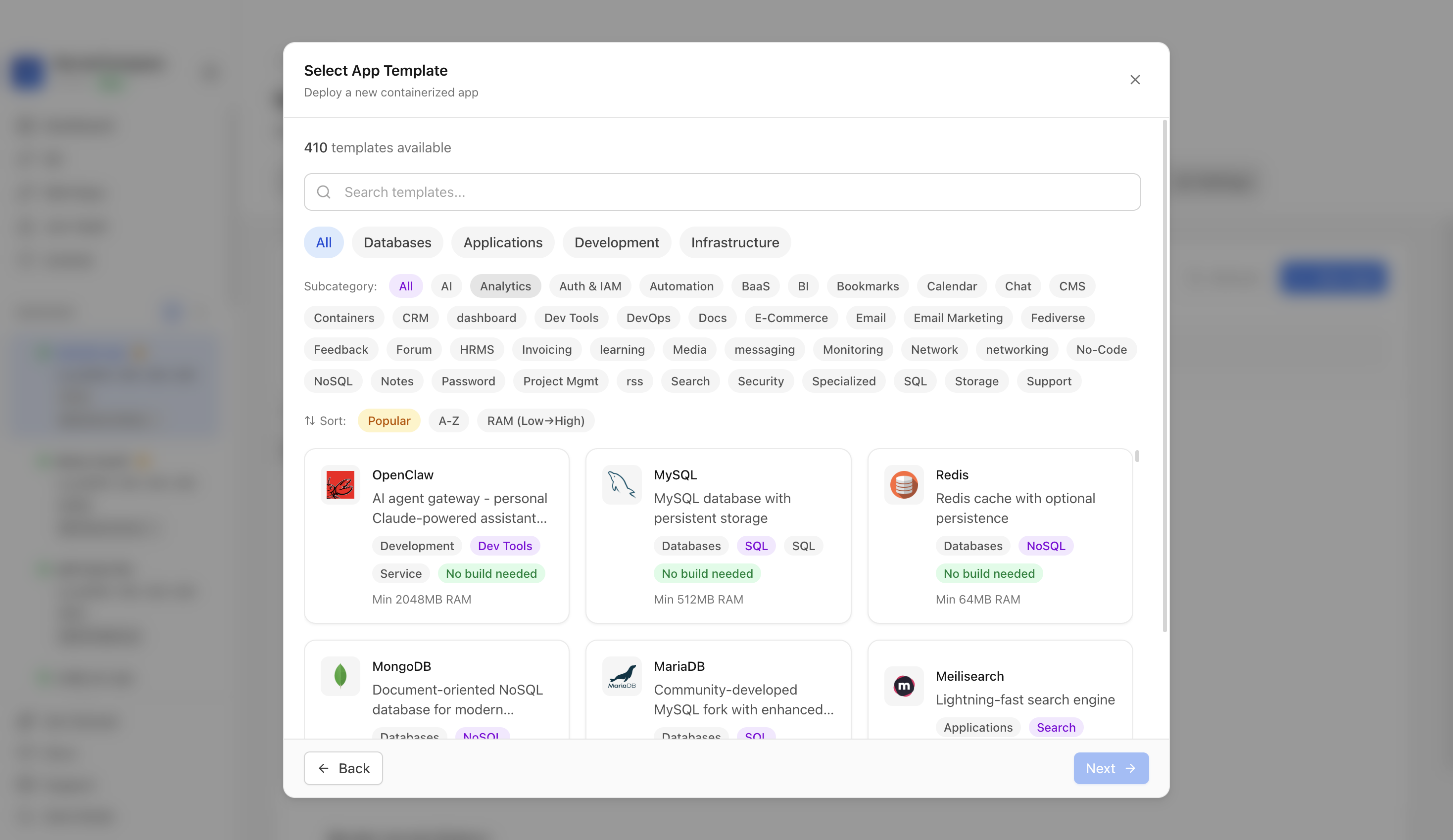
Use the template picker search to find Code Server in the Server Compass template catalog.
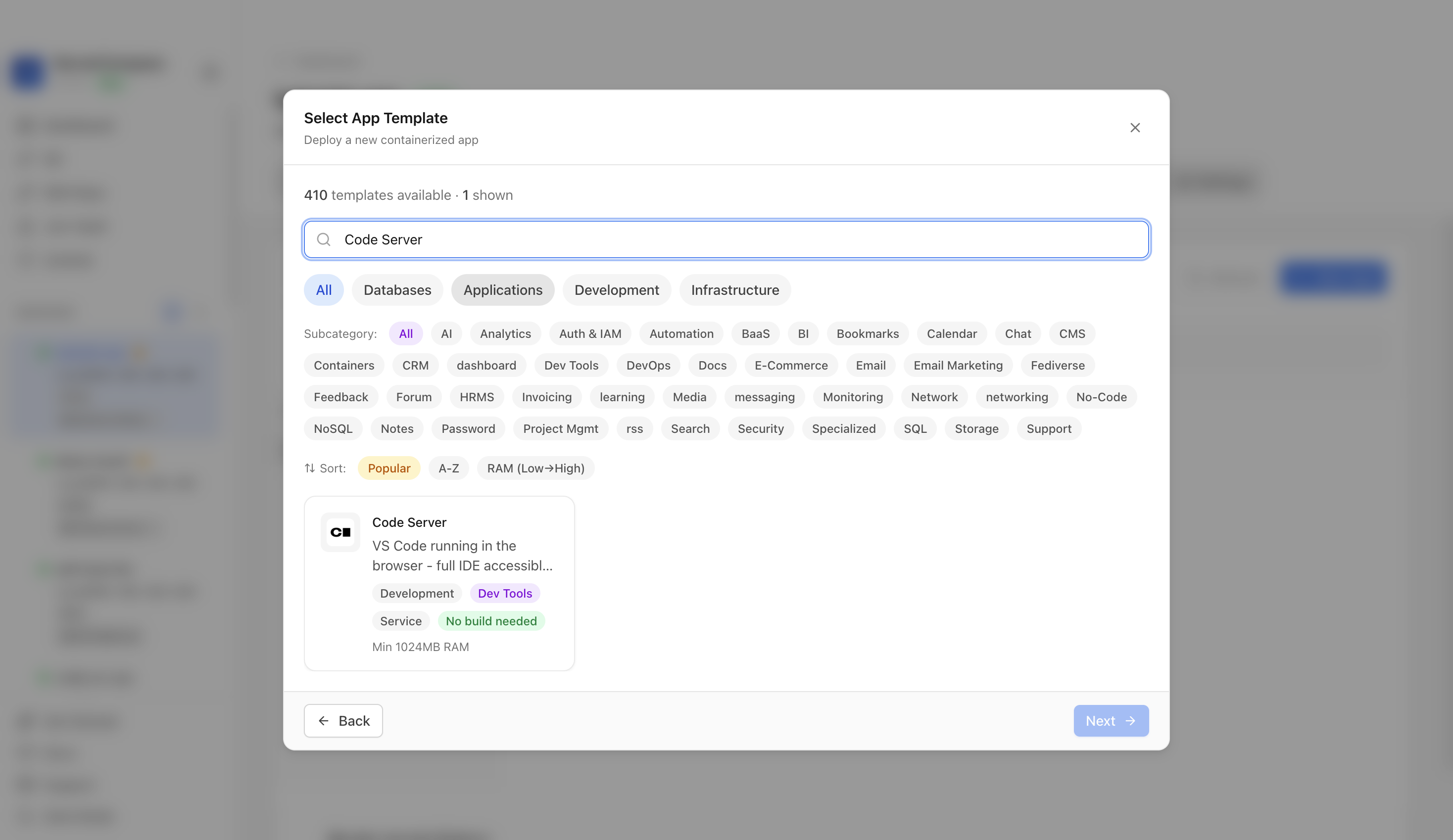
Choose the Code Server template. Server Compass fills the Code Server service, persistent home/workspace volume, generated login password, and web port.
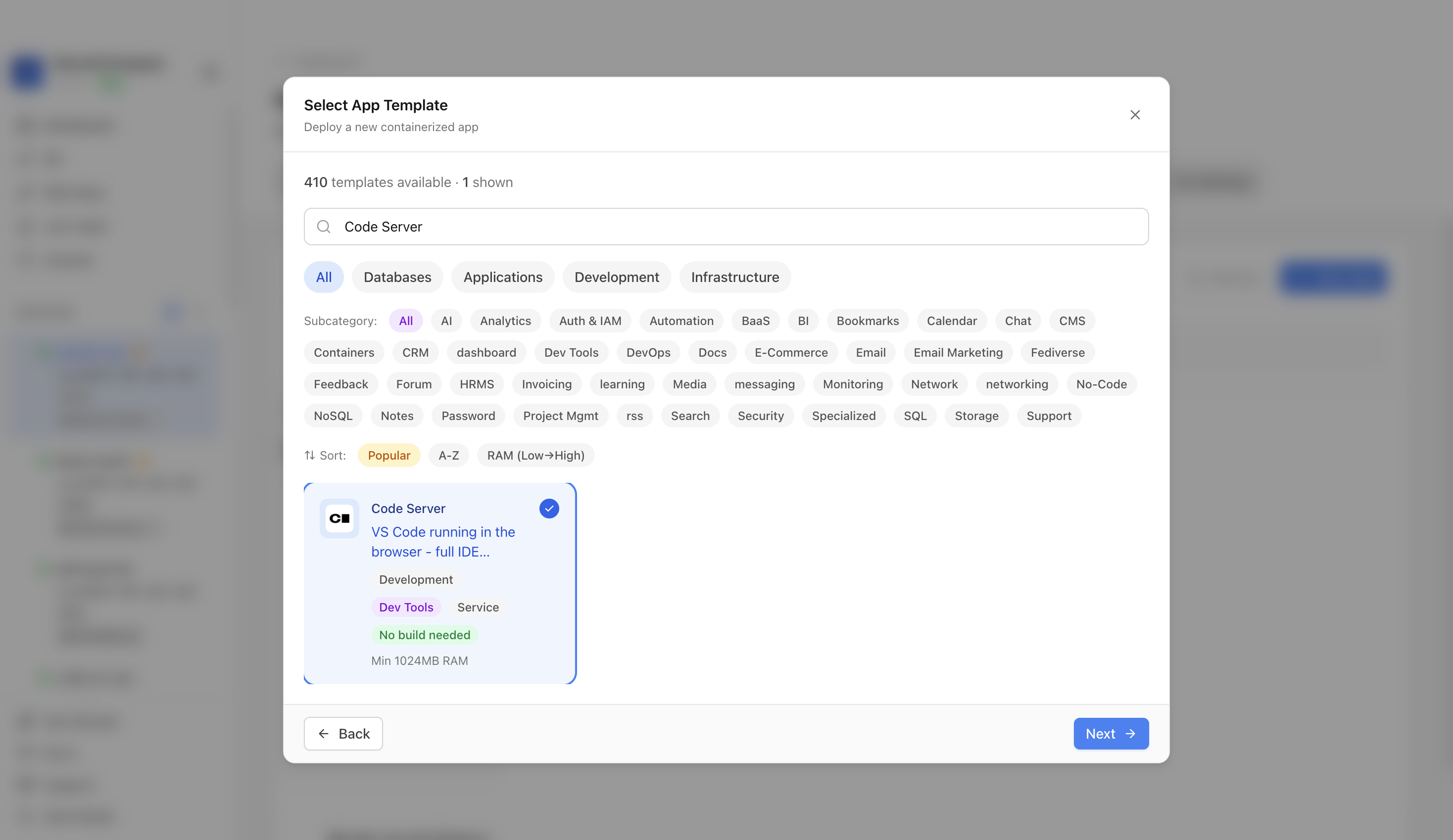
Confirm the app name and compose services. In this run, the app was named code-server-demo and used host port 3001.
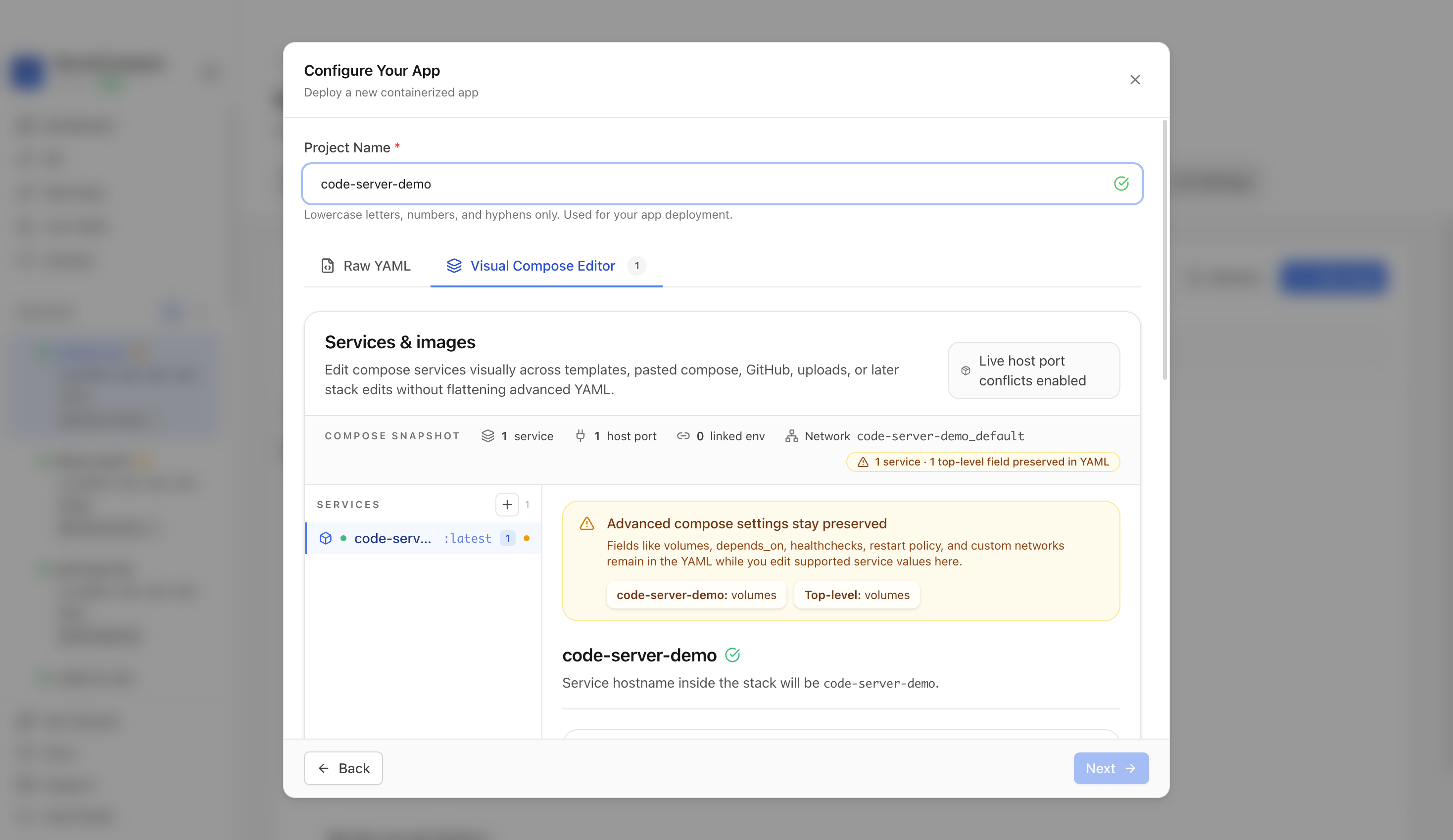
Review the generated compose settings, confirm the web port is available, keep the generated login password hidden, and click Deploy Now.
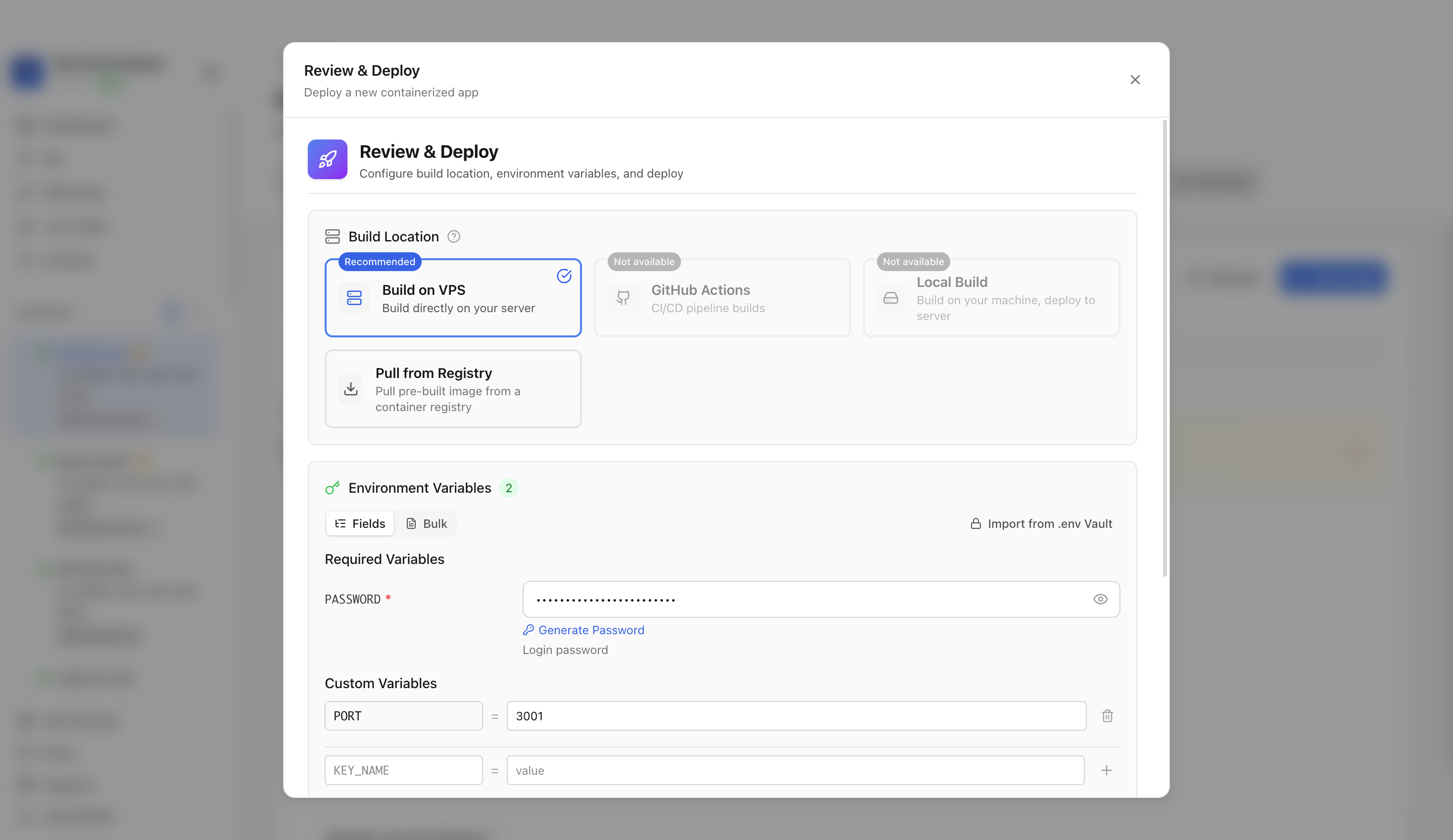
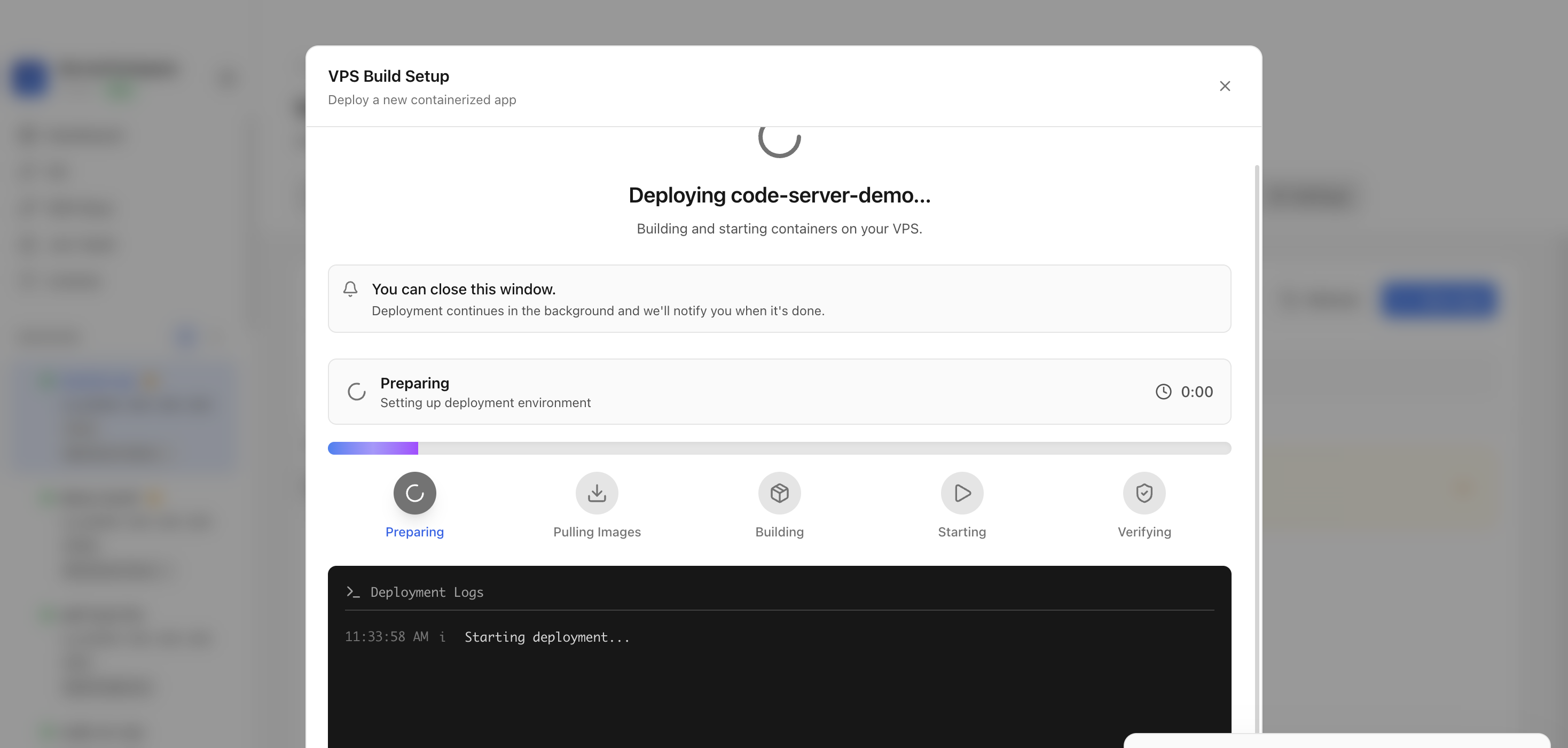
Keep the deployment modal open while Server Compass uploads the compose file, pulls the Code Server image, starts the container, and verifies the stack.
After deployment finishes, return to the Apps tab and confirm the Code Server app is marked Running with its application URL available.
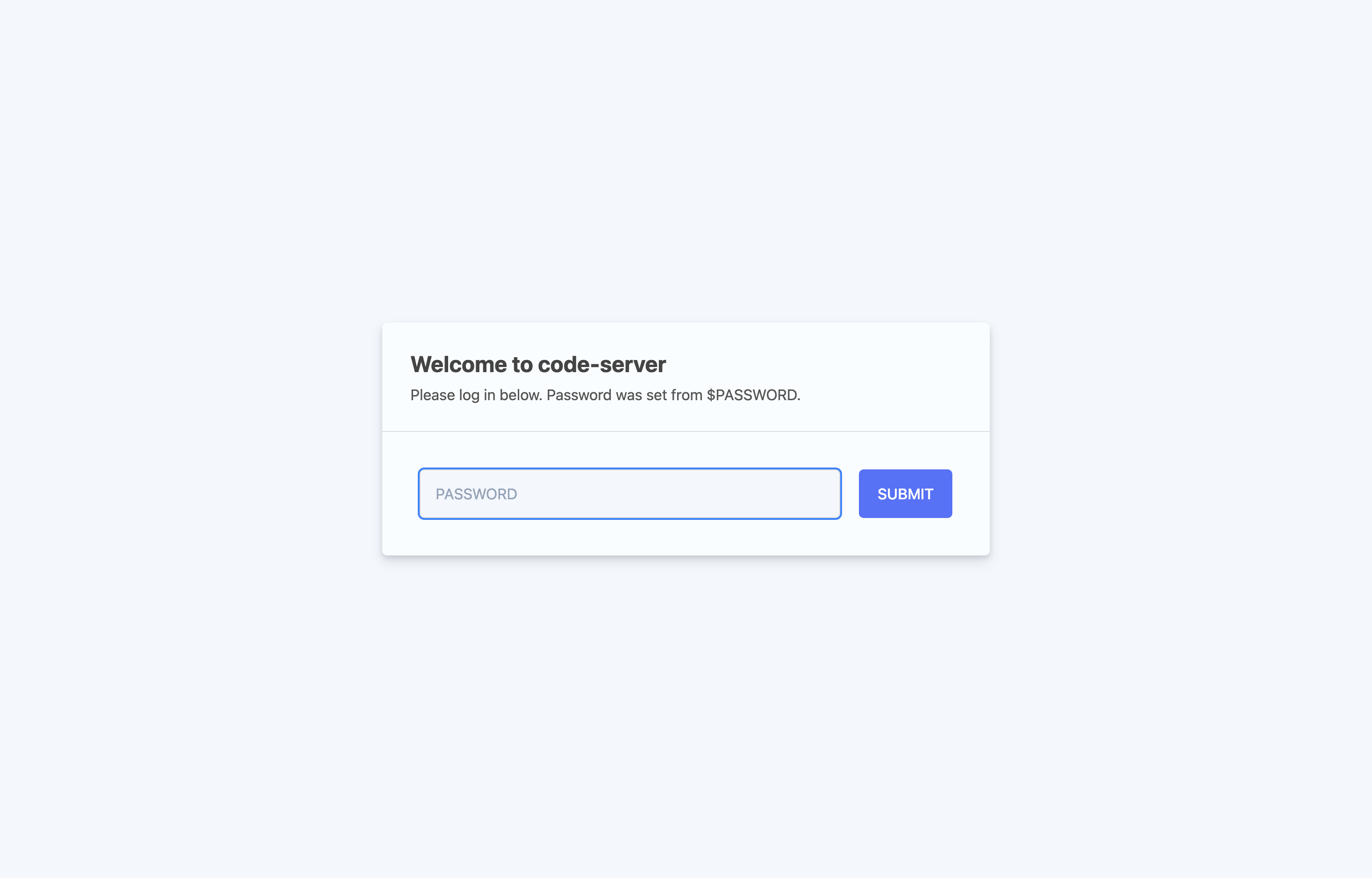
Click Open Application or open the application URL in a browser. The Code Server password screen confirms the browser IDE is reachable without exposing the generated password.
It deploys the Code Server container with a persistent `/home/coder` volume, default workspace path, and generated login password.
The tutorial used host port 3001, which maps to the Code Server web UI on the same generated container port.
A fresh Code Server deployment is considered reachable when the password login form loads. The tutorial does not type or publish the generated password.
No. The deployment guide should live on the Code Server template detail page and be linked from the reusable template deployment docs page.
Code Server runs VS Code in your browser, giving you a full IDE accessible from any device. Self-hosting means you can code from a tablet, Chromebook, or any browser while your code runs on a powerful server with all your dev dependencies pre-installed.
Codespaces charges per hour. Self-hosted Code Server runs 24/7 on your VPS with a fixed monthly cost.
Gitpod is workspace-based with usage limits. Code Server gives you a persistent dev environment always running on your server.
Remote SSH requires VS Code installed. Code Server works from any browser including tablets and locked-down devices.
Server Compass deploys Code Server with persistent storage for your projects, extensions, and settings. Password authentication is pre-configured to secure your IDE from the internet.
Download Server CompassAfter deploying Code Server with Server Compass, complete these steps to finish setup
Access with your password
Install extensions
Open your project folder
Need help? Check out our documentation for detailed guides.
Common questions about self-hosting Code Server
Simply download Server Compass, connect to your VPS, and select Code Server from the templates list. Fill in the required configuration and click Deploy. The entire process takes under 3 minutes.
Code Server requires a minimum of 1024MB RAM. We recommend a VPS with at least 2048MB RAM for optimal performance. Any modern Linux server with Docker support will work.
Yes! Server Compass provides volume mapping that allows you to import existing data. You can also use standard Code Server backup and restore procedures.
Server Compass makes updates easy. Simply click the Update button in your deployment dashboard, and the latest Code Server image will be pulled and deployed with zero downtime.
Code Server is open-source software. You only pay for your VPS hosting (typically $5-20/month) and optionally Server Compass ($29 one-time). No subscription fees or per-seat pricing.

Open-source backend in a single file with realtime database, auth, and file storage

Open-source backend-as-a-service - self-hosted Firebase alternative

Open-source backend framework with dashboard

Full Supabase self-hosted with Kong, GoTrue Auth, Realtime, and Studio
Download Server Compass and deploy Code Server to your VPS in under 3 minutes. No Docker expertise required.
Download Server Compass