1
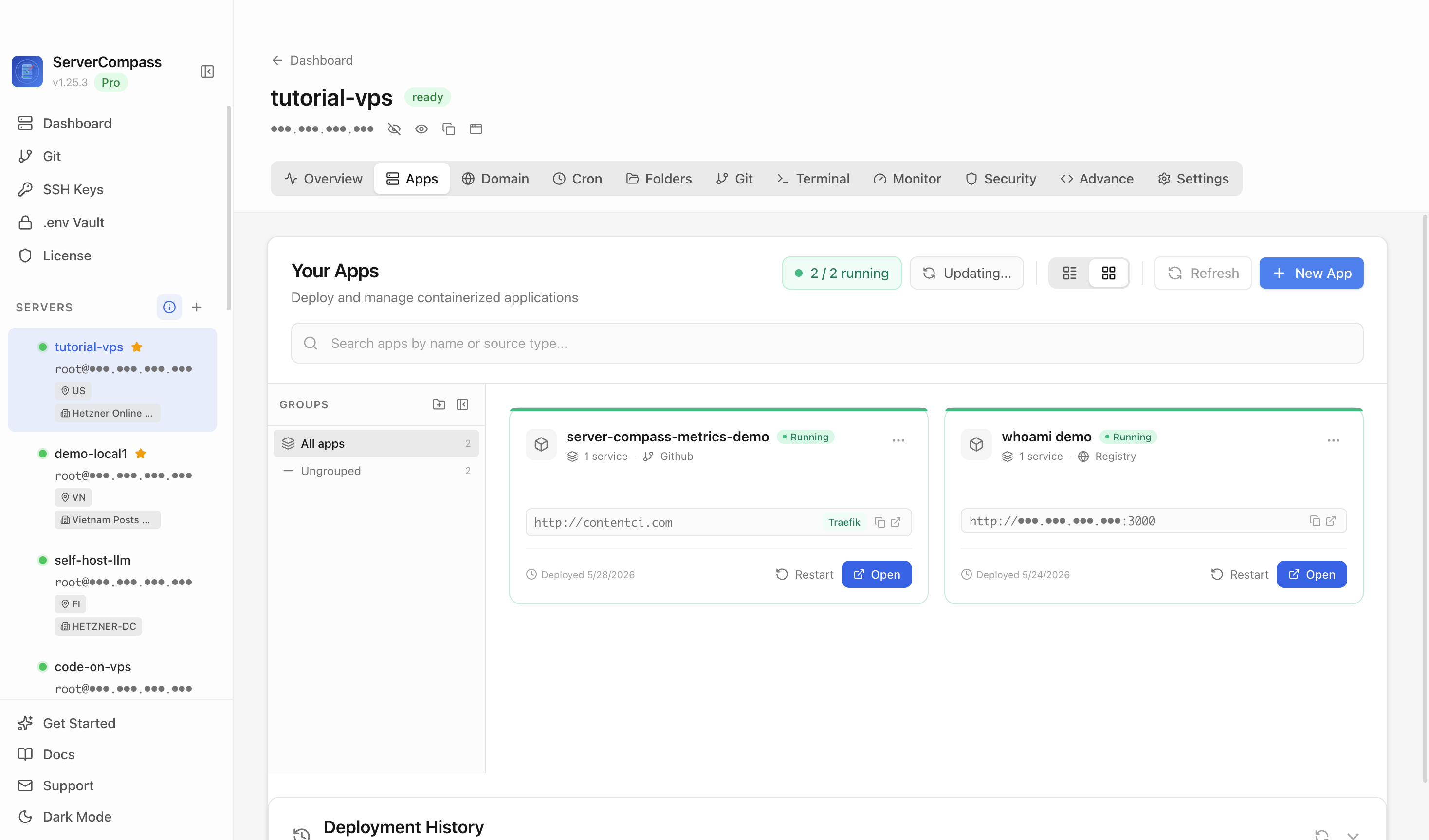
Step 1Open the server Apps tab
Select the tutorial-vps VPS, open the Apps tab, and start a new app deployment. Keep sensitive server details hidden before capturing or sharing screenshots.

Fast, modern VPN with simple configuration
Add your server credentials to Server Compass
Choose from our template library
Fill in settings and click Deploy
Use the WireGuard template in Server Compass to deploy a self-hosted VPN server on your VPS, then verify the UDP service and generated peer configs.
Select the tutorial-vps VPS, open the Apps tab, and start a new app deployment. Keep sensitive server details hidden before capturing or sharing screenshots.
Click New App and choose the template deployment path so Server Compass can load the built-in catalog.
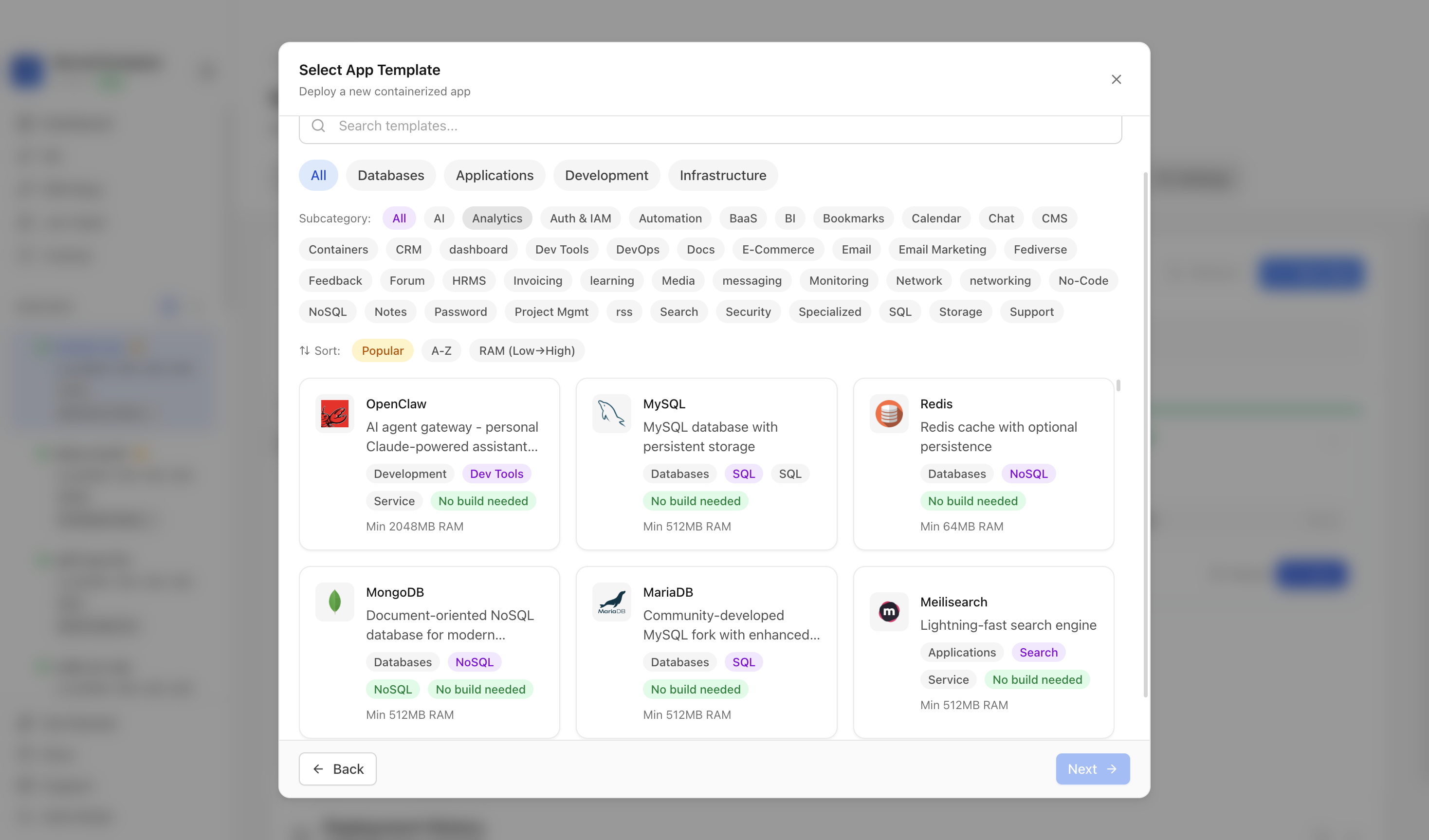
Use the template picker search to find WireGuard in the Server Compass template catalog.
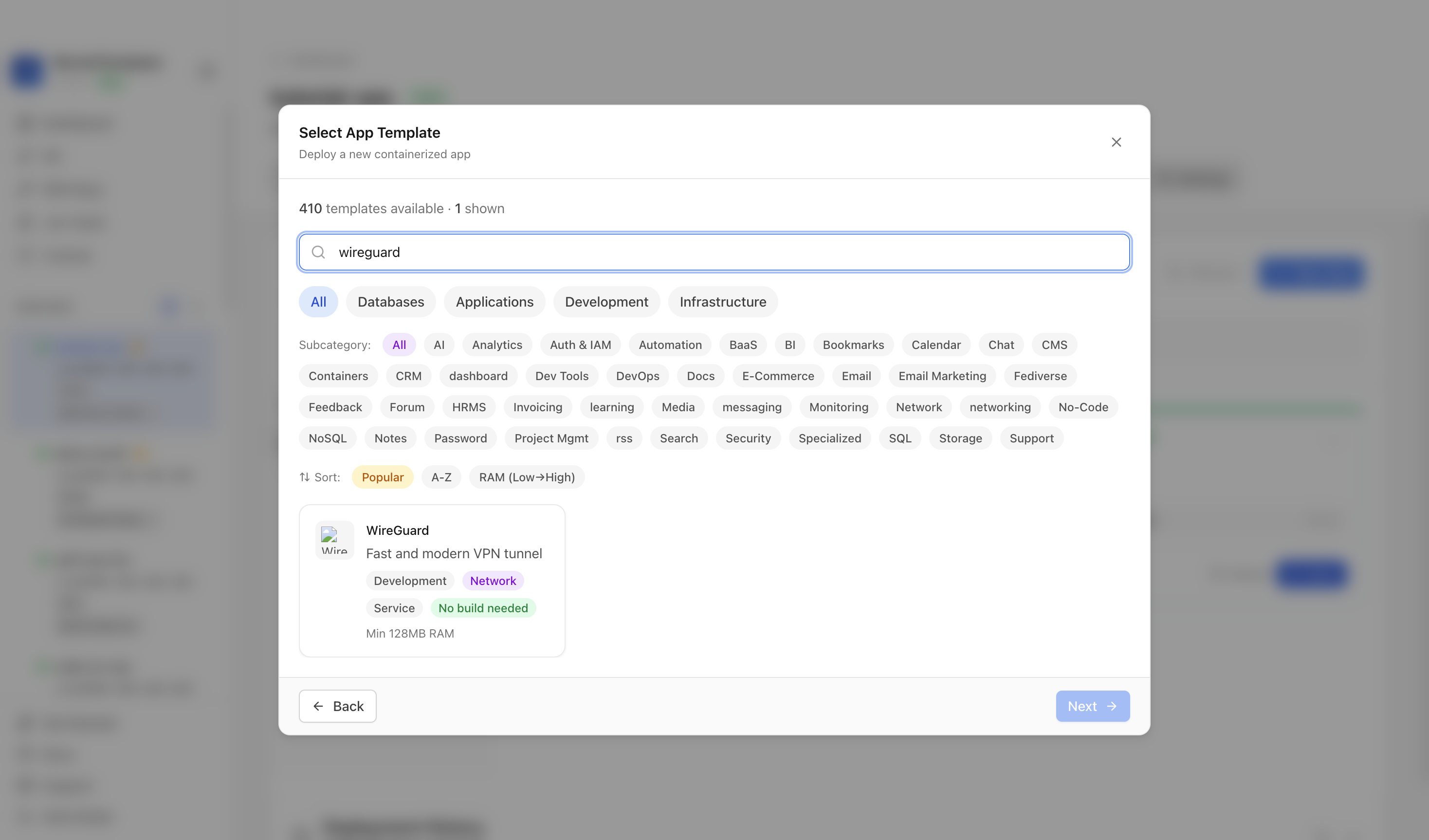
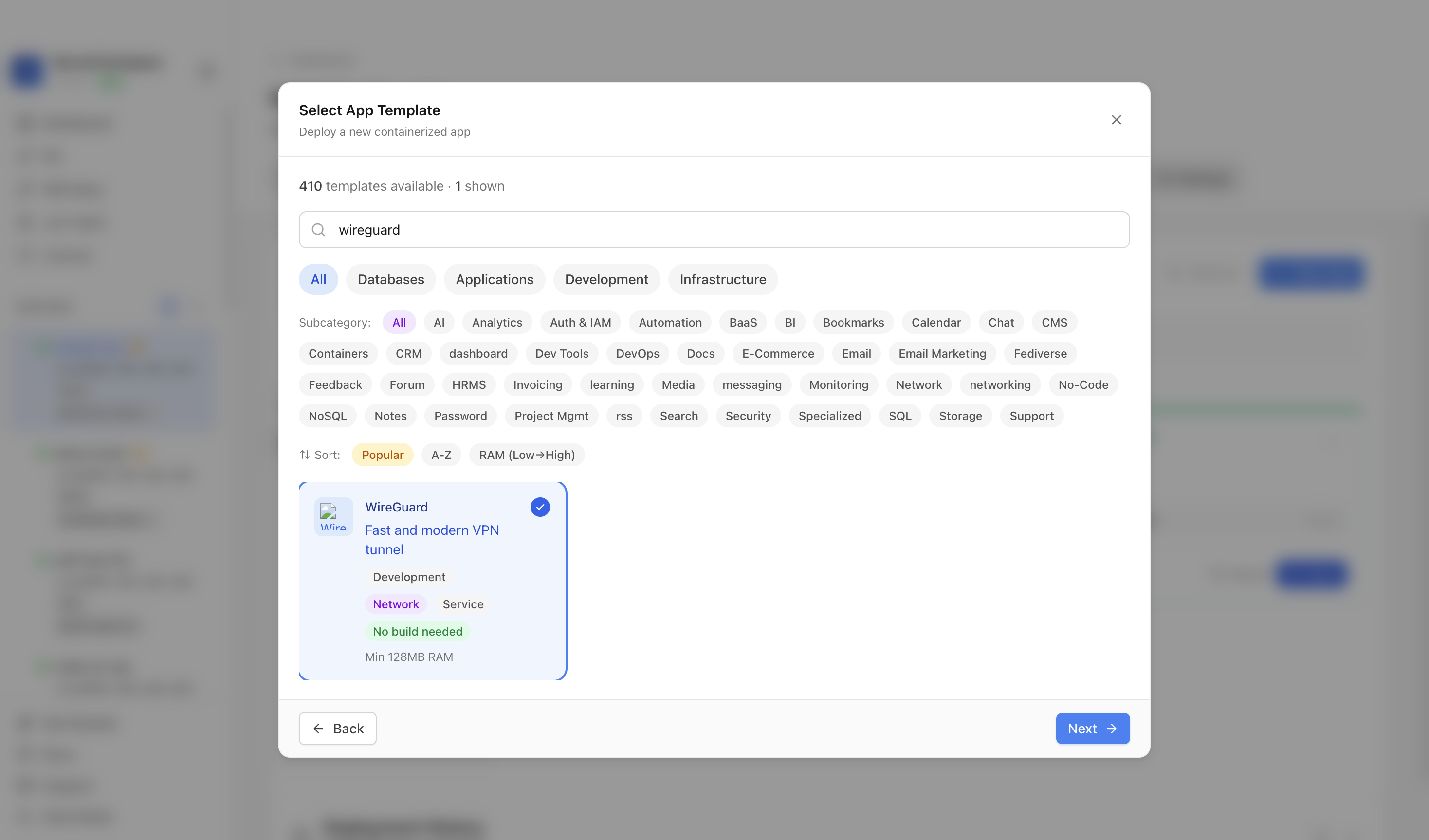
Choose the WireGuard template. Server Compass fills the WireGuard service, UDP port, peer count, and persistent configuration volume.
Confirm the app name and compose service. In this run, the app was named wireguard-demo and used UDP host port 51820.
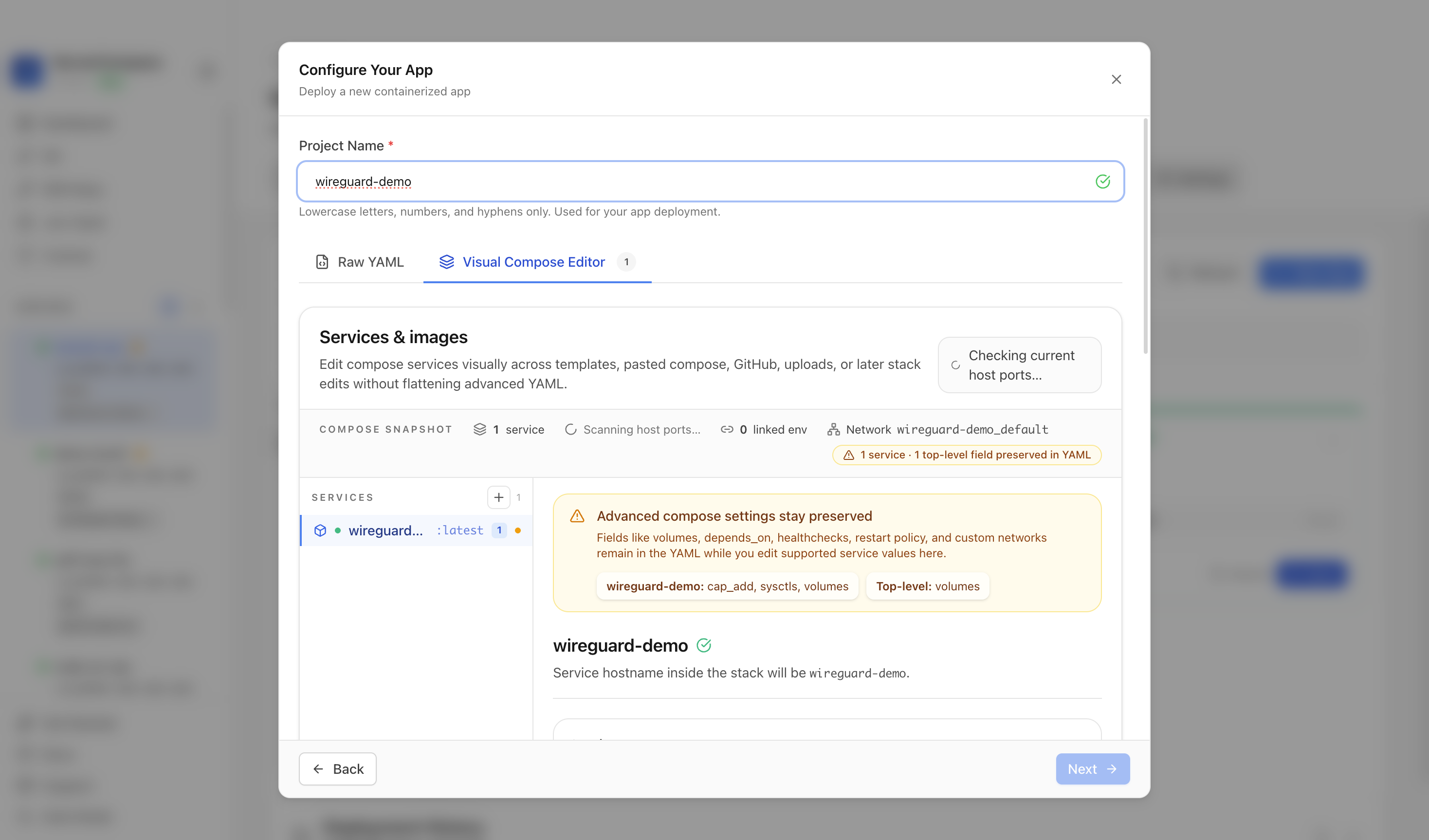
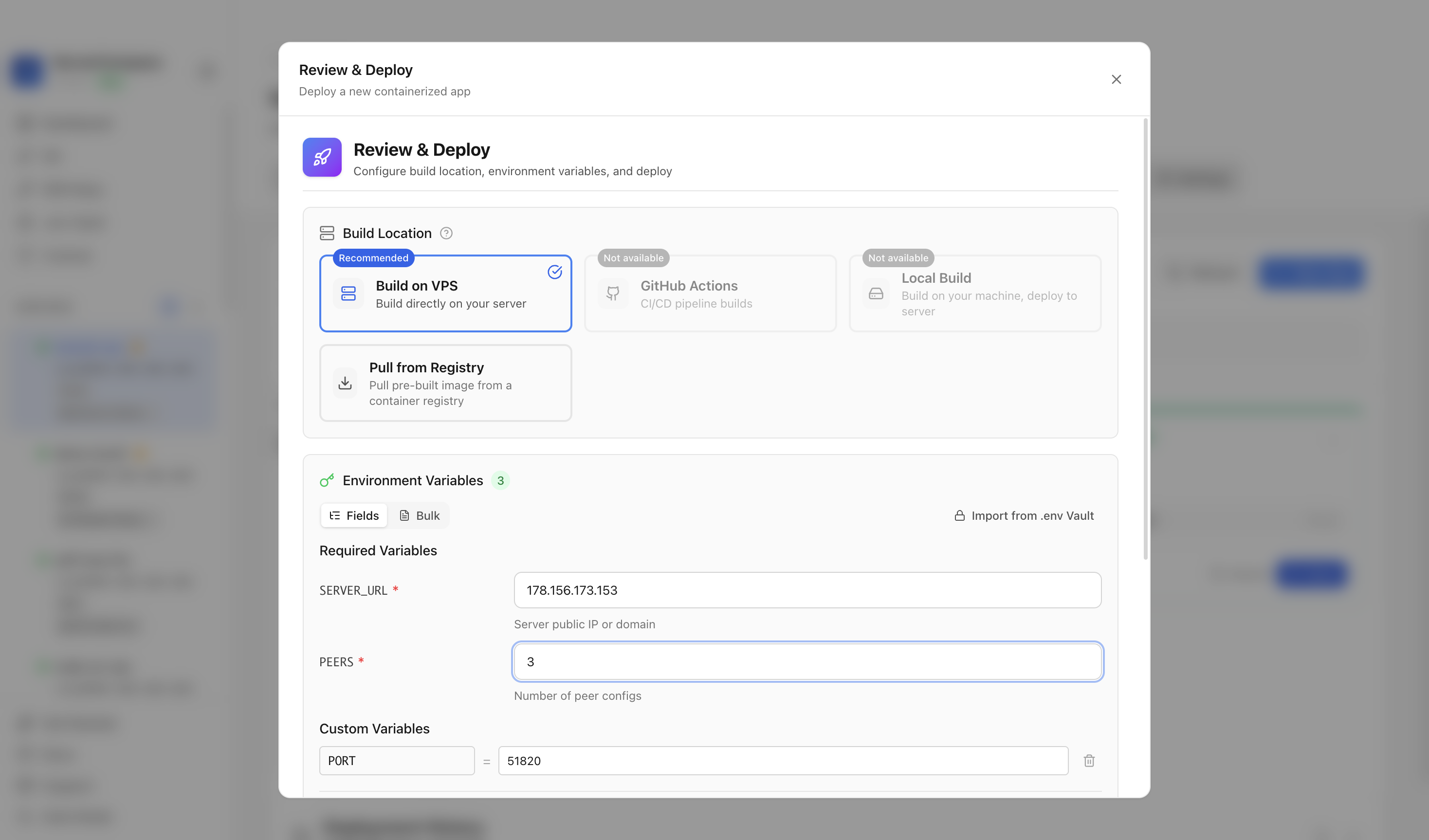
Review the generated compose settings, fill the server URL and peer count if needed, confirm the WireGuard UDP port is available, and click Deploy.
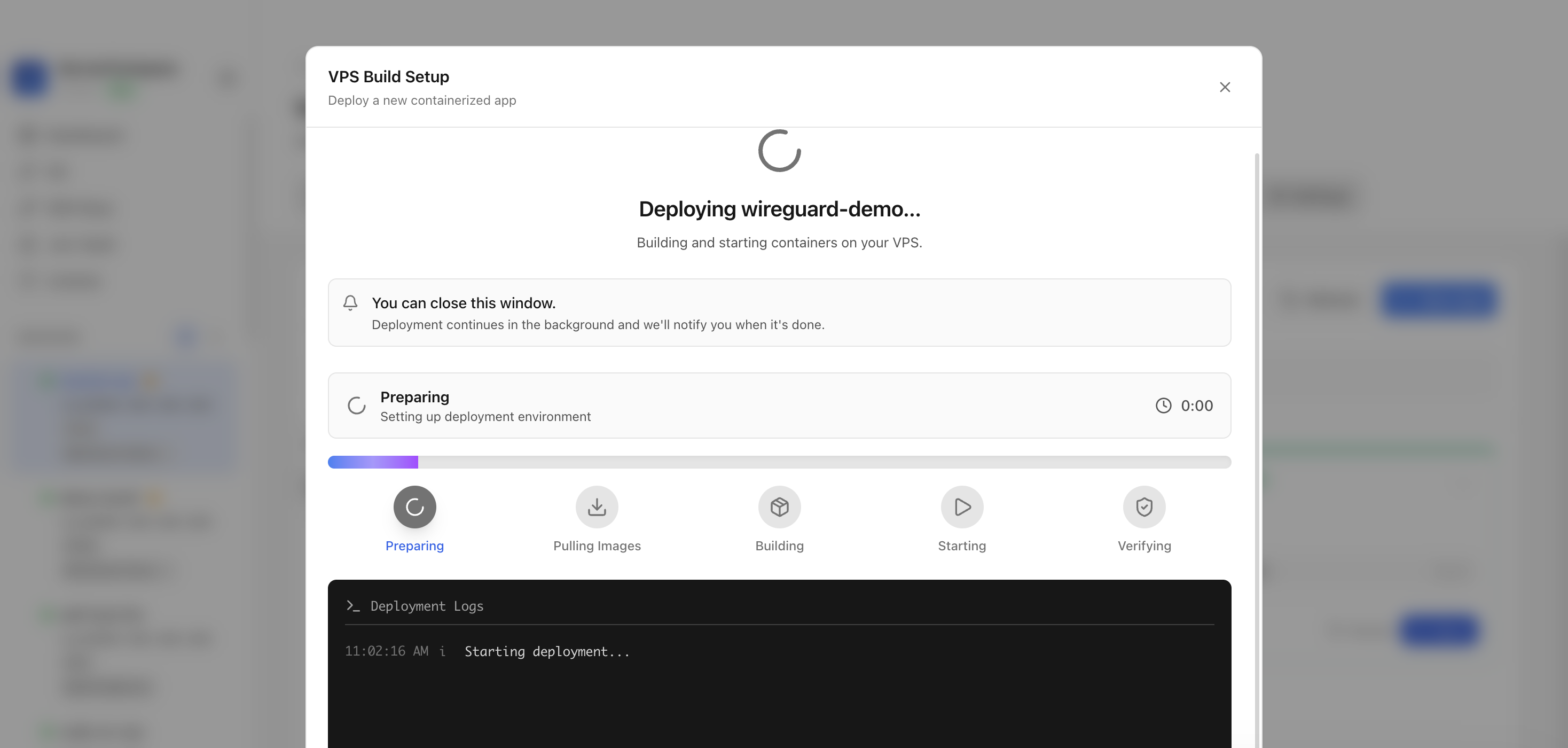
Keep the deployment modal open while Server Compass uploads the compose file, pulls the WireGuard image, starts the container, and verifies the stack.
After deployment finishes, return to the Apps tab and confirm the WireGuard app is marked Running.
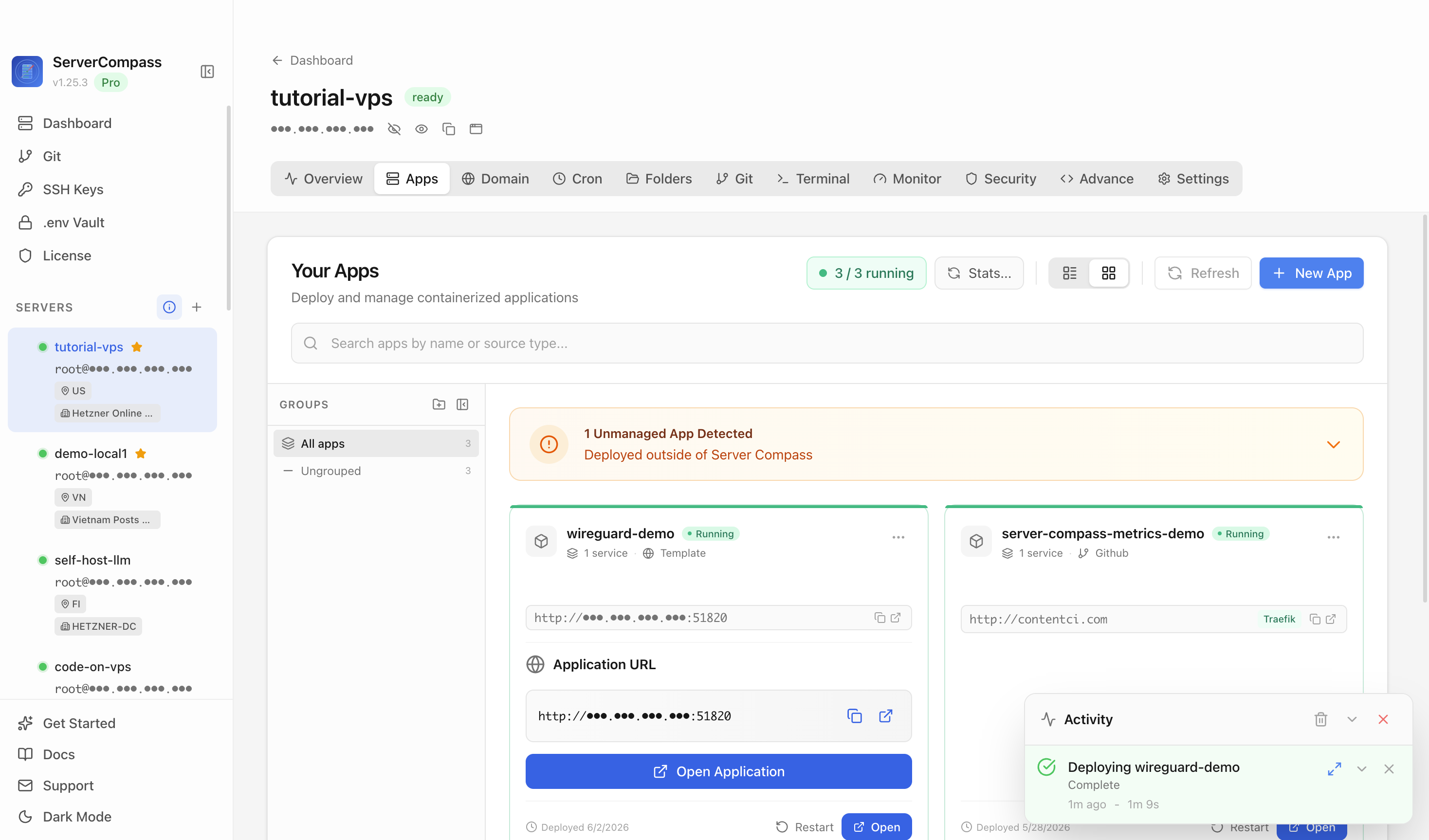
Open the app details or service view and confirm the WireGuard service is running. The final verification also checks the UDP port and confirms peer config files were generated without exposing private keys.
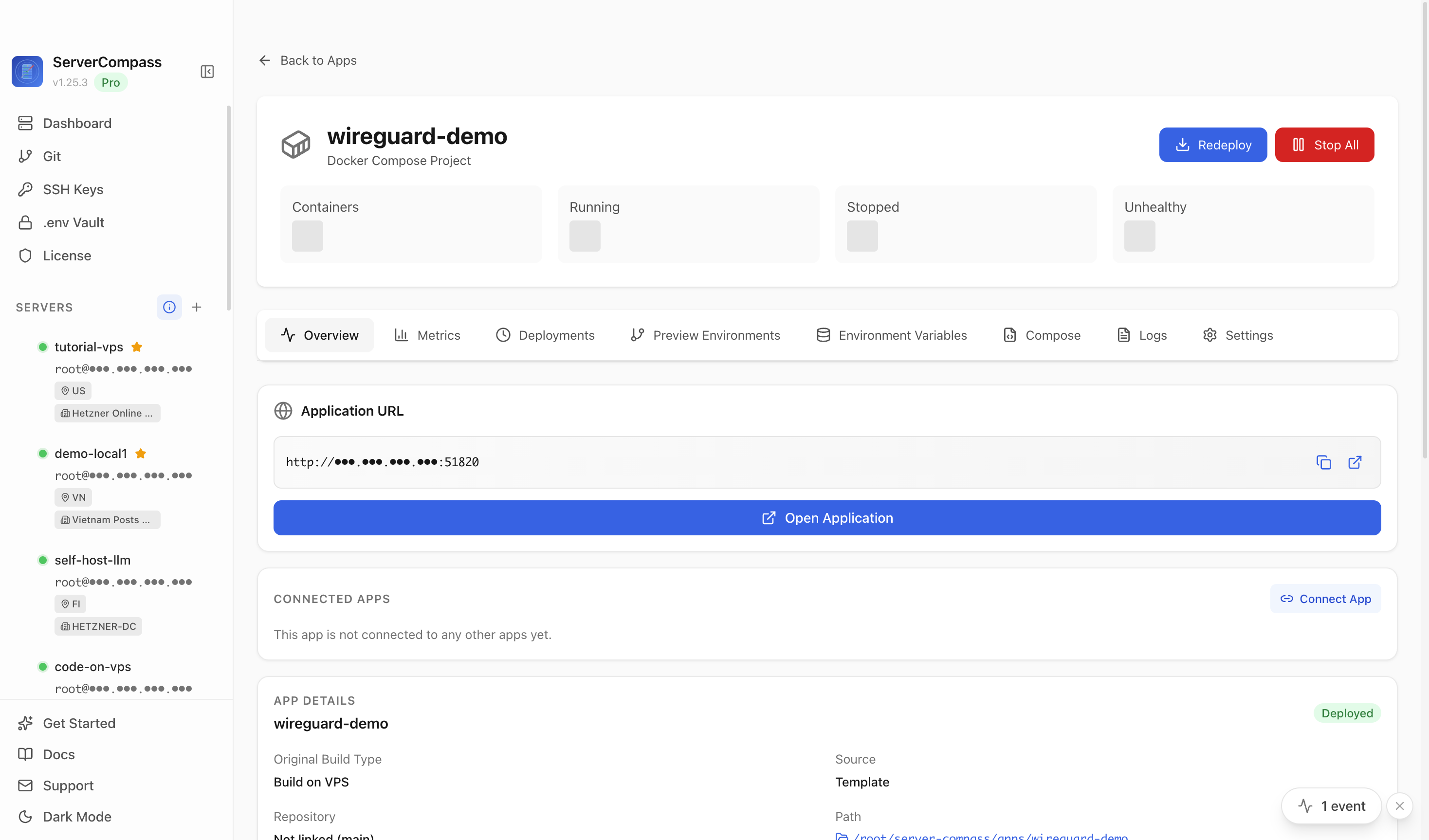
The WireGuard container was running on the VPS, Docker published the expected UDP port, and peer config files existed in the config volume.
It deploys the linuxserver.io WireGuard container with a persistent config volume, generated peer configs, and an exposed UDP endpoint.
The tutorial used UDP host port 51820, mapped to WireGuard container port 51820/udp.
WireGuard is not a browser application. It is considered ready when the container is running, the UDP port is published, and peer config files are generated.
No. The deployment guide should live on the WireGuard template detail page and be linked from the reusable template deployment docs page.
For terminal enthusiasts: deploy WireGuard manually with these simple steps.
Launch your preferred terminal and connect to your VPS using SSH.
# Log into your server
ssh root@<your-server-ip>

# If using key-based auth
ssh -i ~/.ssh/my-key root@<your-server-ip>
First time? Docker not installed? Run: curl -fsSL https://get.docker.com | sh
Prepare a directory for your application files and configuration.
# Create and navigate to project directory
mkdir -p ~/apps/wireguard
cd ~/apps/wireguardCreate the Docker Compose configuration file with these contents:
services:
  wireguard:
    image: linuxserver/wireguard:latest
    cap_add:
      - NET_ADMIN
      - SYS_MODULE
    ports:
      - "51820:51820/udp"
    environment:
      - PUID=1000
      - PGID=1000
      - TZ=UTC
      - SERVERURL=<your-server-url>
      - SERVERPORT=51820
      - PEERS=3
      - PEERDNS=auto
    volumes:
      - wireguard_config:/config
      - /lib/modules:/lib/modules:ro
    sysctls:
      - net.ipv4.conf.all.src_valid_mark=1
    restart: unless-stopped

volumes:
  wireguard_config:
PORTUDP port(default: 51820)SERVER_URLServer URLPEERSNumber of peers(default: 3)Launch the application stack using Docker Compose.
# Deploy the application
docker compose up -d

# Check container health
docker compose ps

# Monitor logs
docker compose logs -f --tail=100Enable external access by opening the necessary port.
# Allow the application port through firewall
sudo ufw allow 51820/tcp
sudo ufw reload

# Access your app at:
# http://your-server-ip:51820Deploy WireGuard without touching the command line. Server Compass gives you a clean UI for one-click deployments.
After deploying WireGuard with Server Compass, complete these steps to finish setup
Get peer configs from container
Distribute to clients
Test VPN connection
Need help? Check out our documentation for detailed guides.
Common questions about self-hosting WireGuard
Simply download Server Compass, connect to your VPS, and select WireGuard from the templates list. Fill in the required configuration and click Deploy. The entire process takes under 3 minutes.
WireGuard requires a minimum of 64MB RAM. We recommend a VPS with at least 1024MB RAM for optimal performance. Any modern Linux server with Docker support will work.
Yes! Server Compass provides volume mapping that allows you to import existing data. You can also use standard WireGuard backup and restore procedures.
Server Compass makes updates easy. Simply click the Update button in your deployment dashboard, and the latest WireGuard image will be pulled and deployed with zero downtime.
WireGuard is open-source software. You only pay for your VPS hosting (typically $5-20/month) and optionally Server Compass ($29 one-time). No subscription fees or per-seat pricing.

Open-source backend in a single file with realtime database, auth, and file storage

Open-source backend-as-a-service - self-hosted Firebase alternative

Open-source backend framework with dashboard

Full Supabase self-hosted with Kong, GoTrue Auth, Realtime, and Studio
Download Server Compass and deploy WireGuard to your VPS in under 3 minutes. No Docker expertise required.
Download Server Compass